ORGANIZATIONAL HEALTH
is
an organization's ability to function effectively, to cope adequately, to change appropriately and to grow from within.
Health Zones
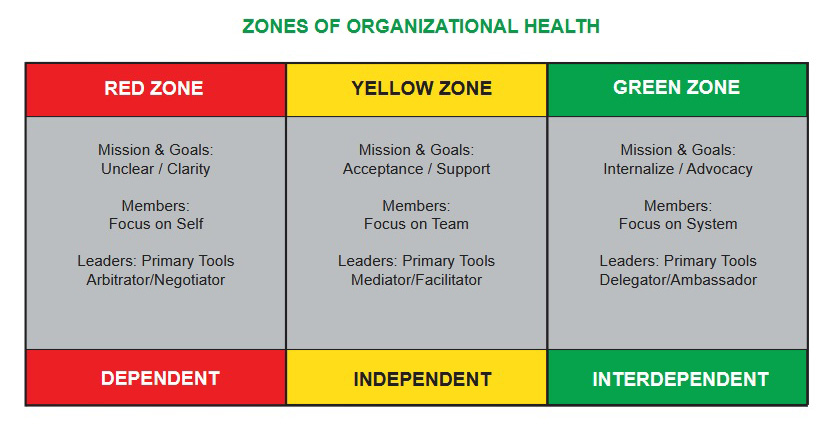
Goal Focus
When important decisions are made...
🔴 People wait for leadership to decide.
🟡 Teams participate but often need direction.
🟢 Team members actively advocate for mission-aligned decisions.
Cohesiveness
When disagreements occur...
🔴 People avoid conflict or take issues to the parking lot.
🟡 Teams work through some issues but often depend on leadership intervention.
🟢 Teams address issues directly and constructively.
Adaptation
When change is introduced...
🔴 Resistance is common.
🟡 People will support change once convinced.
🟢 People actively look for ways to improve and adapt.
What zone are you operating in?
The Parking Lot Meeting
You've just wrapped a meeting. The room was calm — polite nods, no pushback, everyone headed back to work. You read the quiet as agreement.
Later, you spot a few team members deep in an animated conversation in the parking lot. The energy is nothing like what you saw in the room an hour ago.
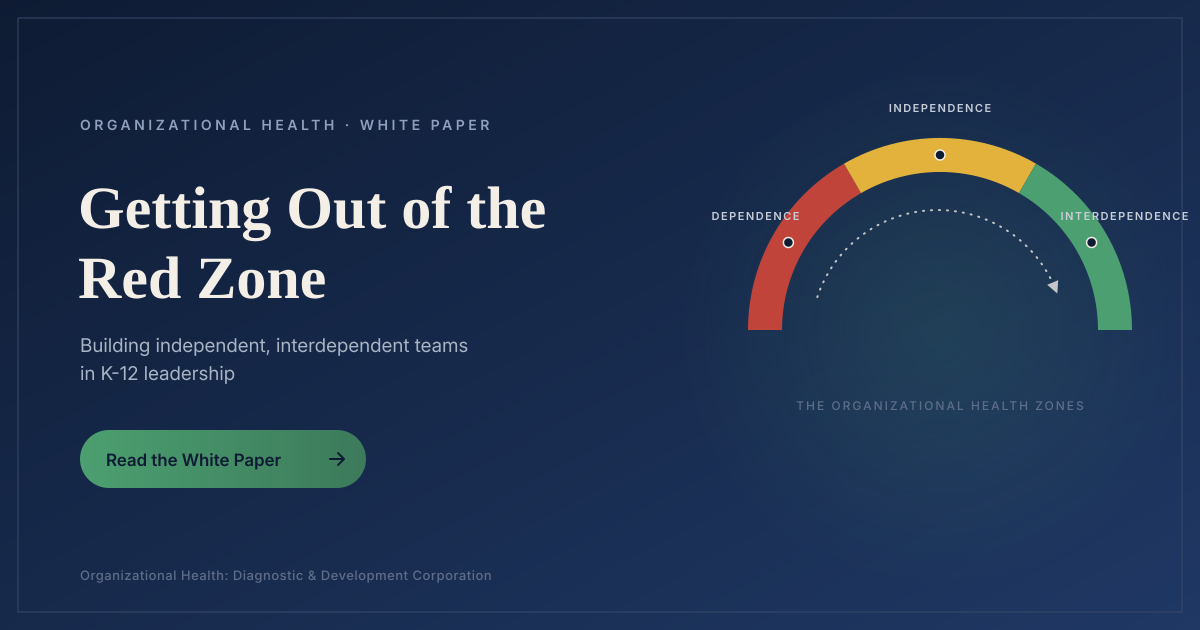
If that sounds familiar, you may be looking at what we call the Red Zone — a stage where a team depends heavily on its leader for direction, decisions, and problem-solving, because it hasn't yet built the capacity to do those things on its own. Meetings stay quiet. The real conversations happen elsewhere.
It's not always a failure of leadership. Sometimes it's the leader's expectations, sometimes the team's, often both. But an organization stuck here isn't developing new leaders — and it isn't moving as fast as it could.
Here's the encouraging part: moving out of the Red Zone doesn't require new funding or a new initiative. It requires a handful of consistent habits, practiced by leaders first.
We wrote a short white paper on exactly this — what the Red Zone looks like, why it matters in schools, and six habits that move a team toward real independence and interdependence. Link in the comments.
Where does your team have its real meetings — in the room, or in the parking lot?
Organizational Health
We measure ten dimensions and develop leaders through six leadership beliefs, but we have one overriding priority: improving organizational health. Why? Because healthy organizations make everything else possible.
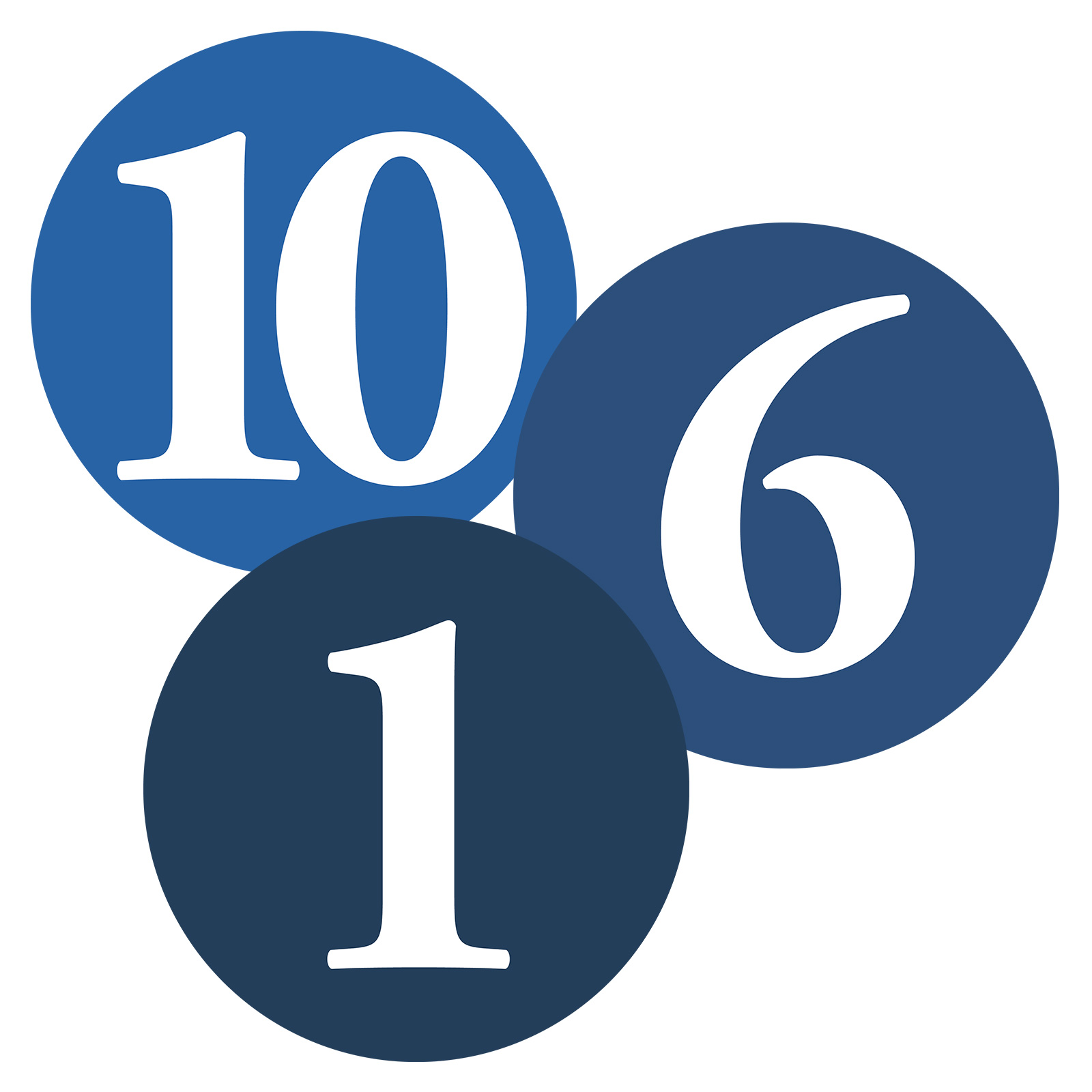
How organizations function
How leaders lead
What we're trying to achieve
The Big 3