
Give us 20 minutes.
We'll show you what 20 minutes can reveal about a school.
Same district. Different schools.
Similar expectations. Same district leadership.
But very different organizational conditions.
School A
This faculty experiences strong direction and clear expectations. Things tend to move. But responsibility and decision-making are concentrated, and faculty ownership is more limited. Share too little power, and you risk losing commitment.
School B
This faculty experiences high levels of trust, participation and shared authority. But some important issues remain unresolved, and responsibility for acting on them can become unclear. Share too much power, and you risk losing quality.
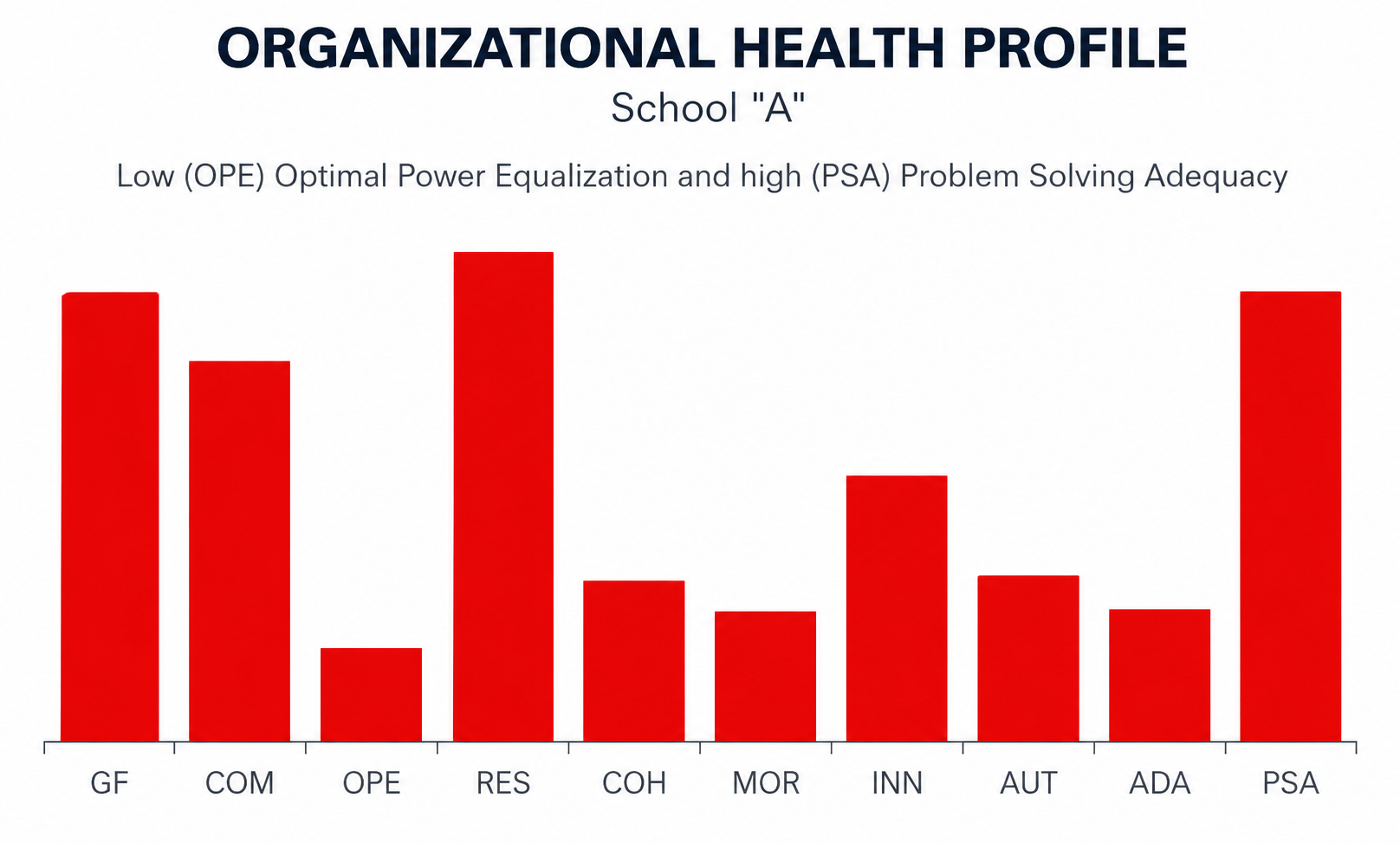
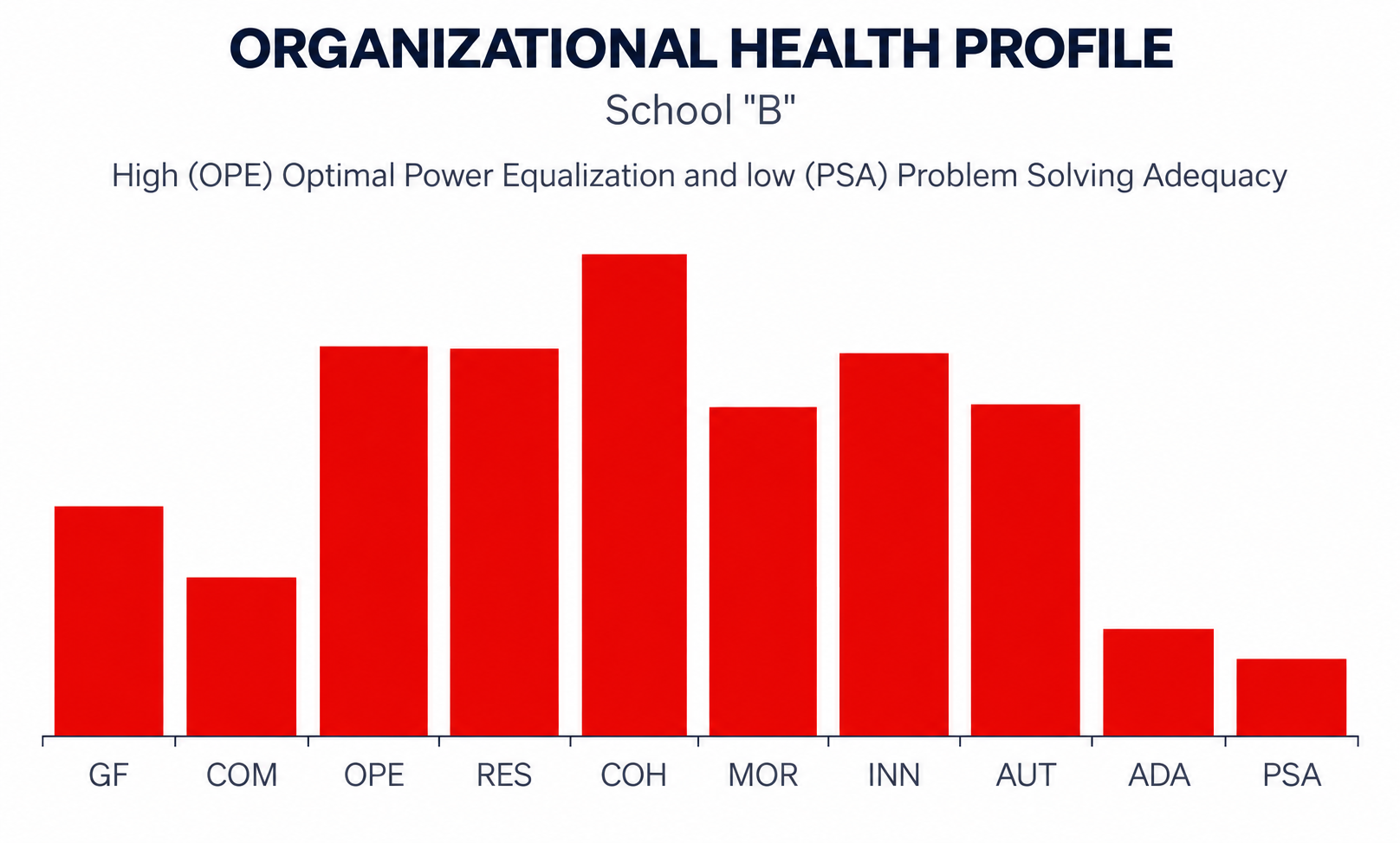
Same district. Different conditions.
These data aren't a judgment of either principal. They're a picture of the organizational conditions within each school at this moment.
These are organizational data.
Not personal data.
The purpose is not to label a principal or identify a "problem" school.
It's to help leaders see the organization as it actually is.
Leadership begins by understanding those conditions —
and being willing to own what the data reveal.
Different conditions require different leadership responses.
Where did all of this information come from?
About 20 minutes during a regularly scheduled faculty meeting.
Twenty minutes doesn't change a school.
But it can change what you see.
Seeing clearly is the beginning.
Data can tell us where the organization is.
What matters next is what leaders and their teams do with what they learn.
Nothing changes if nothing changes.
Organizational Health helps leaders and their teams turn what they see into informed, intentional change—grounded in the needs of their organization.
And they don't have to do it alone.
20 minutes is only the beginning.
40+ YEARS
of research and data
10 DIMENSIONS
of organizational health
RESEARCH
connecting organizational conditions and student performance
DEVELOPMENT
turning insights into action
What could 20 minutes reveal about your schools?